Stop learning
your own house.
Smart homes make you memorize things - which app, which device name, which exact phrase the speaker accepts. An AI agent removes that. You say what you want the way you'd say it to a person, and the house works out which switches that means.
Built on your own hub, running in your house. Quoted per home.
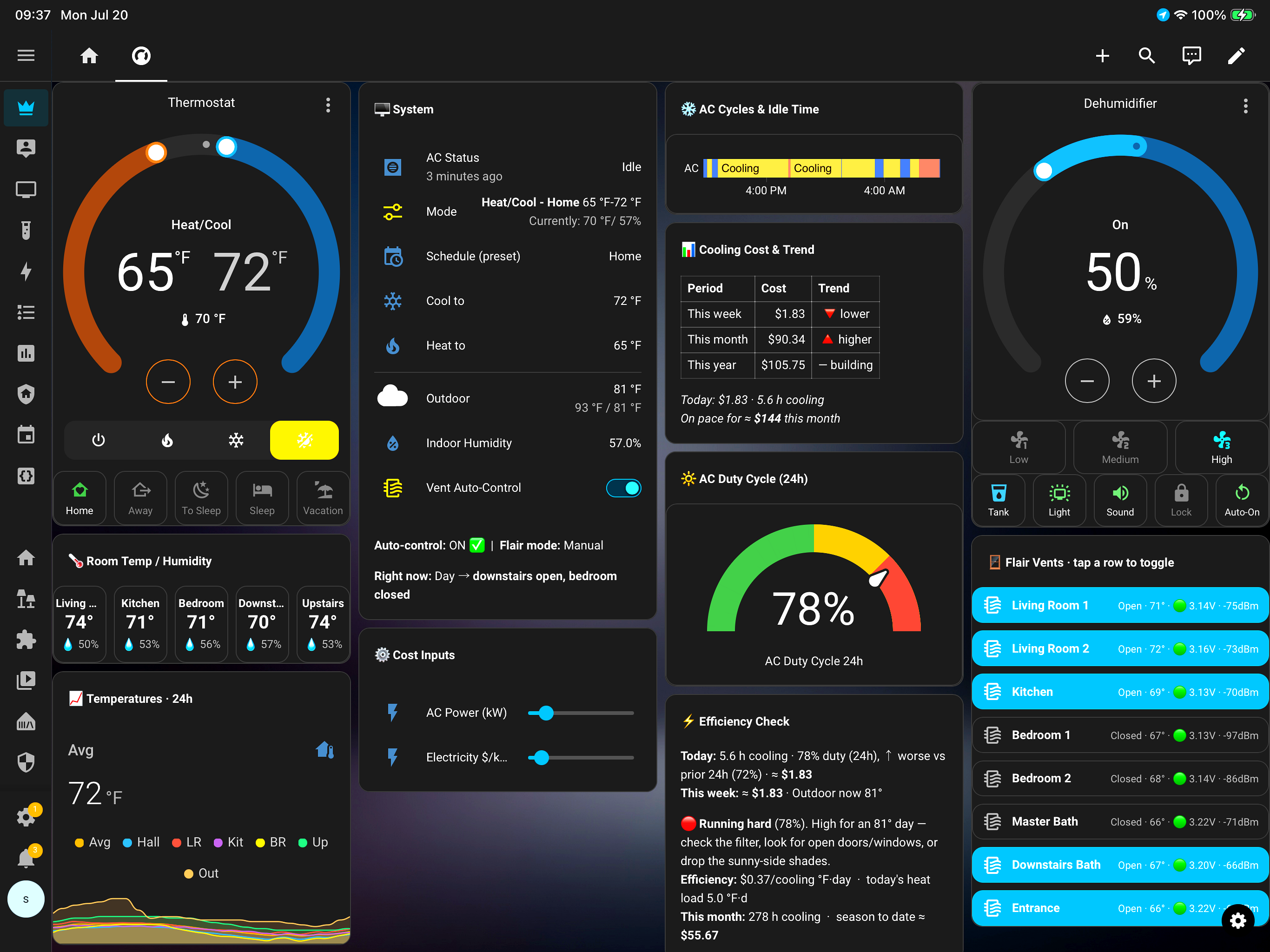
What that looks like
Things a voice assistant can't do, because they aren't on a list of commands anywhere.
How it's different from Alexa
This is the question everyone asks first, and it's a fair one.
It doesn't need the magic words
A voice assistant matches your sentence against a fixed list. Miss the device name and it fails. An agent reasons about the house, so a request it has never heard still lands - and it asks when it isn't sure.
It knows your house specifically
Which rooms exist, what's in them, which vent feeds the nursery, that "the back room" and "the office" are the same place. Generic assistants know none of this and can't be taught it.
It lives on your hub
It runs through your own hub in your own house, with permissions you set. Not a product a company can change out from under you, and not a speaker listening in every room by default.
What it isn't
It isn't a replacement for automations. The things that should happen every single night without being asked - doors locking, lights going off - stay as plain automations, because those need to be exactly right every time. The agent handles the things you'd otherwise have to go build.
It isn't infallible. It occasionally misreads a request, the same way a person would. That's exactly why locks, cameras and alarms are opt-in permissions rather than defaults, and why it reports what it did.
It isn't a smart speaker. You reach it however suits you - a phone, a dashboard, a chat window. No new hardware listening in every room unless you specifically want that.
It isn't a first step. It needs a hub underneath it that already knows your devices. If you don't have one, that's the job that comes first - and it's worth doing on its own merits either way.
What you need first
An agent acts through a hub, because that's what actually talks to your devices. In practice that means Home Assistant, which is where we'd start if you don't have one yet. If you already run a hub, we can work with what's there.
There's also a choice to make about where the intelligence runs. A model running entirely inside your house keeps every request local and needs a reasonably capable machine to do it. A hosted model is cheaper and quicker but sends part of each request out to a provider. Neither is the obviously right answer - we'll lay out the tradeoff and build whichever you choose.
Quoted per home
There's no honest list price for this one. The work scales with how many devices the agent has to understand, whether the model runs in your house or hosted, and how much you want it allowed to do on its own.
So it's a walkthrough first and a flat price second - written down before anyone starts, same as every other job here. If you don't have a hub yet, that part is from $599 and quoted separately, so you can see what you're paying for.
If a hosted model is what makes sense for your house, there's a small running cost for it. We'll tell you roughly what it comes to per month before you decide, not after.
Common questions
How is this different from Alexa or Google Home?
Voice assistants match what you say against a fixed list of commands, which is why you have to know the exact device name and phrasing. An agent works from an understanding of your house, so it handles requests it has never heard, asks when something is ambiguous, and tells you what it did.
Do I need a hub first?
Yes. The agent acts through a hub - usually Home Assistant - because that's what's actually connected to your devices. No hub yet means the hub install comes first and the agent goes on afterward.
Does it send my home data somewhere?
That's a decision you make before we build anything. A fully local model keeps everything inside the house and needs a capable machine to run on. A hosted model is faster and cheaper but sends the parts of a request it needs to a provider. We'll explain the tradeoff plainly rather than pretending one option has no downside.
Can it unlock my doors?
Only if you decide it should. Locks, garage doors, cameras and alarms are explicit permissions, not defaults. Plenty of households keep the agent read-only on anything security-related and let it act freely on everything else. Where that line sits is yours to draw, and we write it down as part of the build.
What if I don't like it?
The agent sits on top of your hub rather than replacing it. Turn it off and you still have a working smart home with every automation intact - you've just gone back to pressing buttons. Nothing is built in a way that traps you.